By Chris Karageuzian, Founder of Chris Alchemy Consulting · Pasadena, CA
It's 7:14 PM on a Thursday. Your phone rings. You're at your kid's game, your front desk went home at 5, and the caller hangs up after four rings. By 7:30 they've booked with the next business on Google.
a full-time receptionist costs a U.S. small business roughly $54,000 a year once you add payroll taxes and benefits to a median wage of about $38,000, and covers about 40 of the 168 hours in a week. An AI receptionist typically costs $275 to $1,500 a month ($3,300 to $18,000 a year), answers 24/7, and responds to leads in under a minute. For most small businesses the AI handles the repetitive front-desk work, and the humans you already have handle the relationships.
What does a receptionist really cost?
A full-time receptionist costs about $54,000 a year in total, not the $38,000 on the offer letter. The median U.S. receptionist earned $18.27 an hour in May 2025, which is about $38,000 for a 2,080-hour year.
Then comes everything on top of the paycheck. In June 2026, benefits made up 30% of what private employers spent per hour worked: payroll taxes, paid leave, insurance, retirement. Apply that ratio and $38,000 in wages becomes roughly $54,000 in total cost. In California and other high-cost markets, expect more.
And that's before the costs nobody budgets for:
- Hiring: job posts, recruiter fees, and the hours you spend interviewing instead of selling.
- Training: weeks before a new hire knows your services, pricing, and policies.
- Turnover: when they quit, you pay all of it again.
- Coverage gaps: lunch, sick days, vacations, and the 128 hours a week they're not on the clock.
Here's what I tell my clients: I've hired great people and I've hired people who told me they called a lead when they didn't. Either way, one person can only answer one phone at a time, during business hours.
What does an AI receptionist cost, and what does it do?
An AI receptionist runs from about $275 a month for a basic setup to around $1,500 a month for a custom build with full CRM and automation. It answers calls and texts 24/7, never calls out sick, and never quits on a Friday.
A well-built one handles the front-desk work that eats your day:
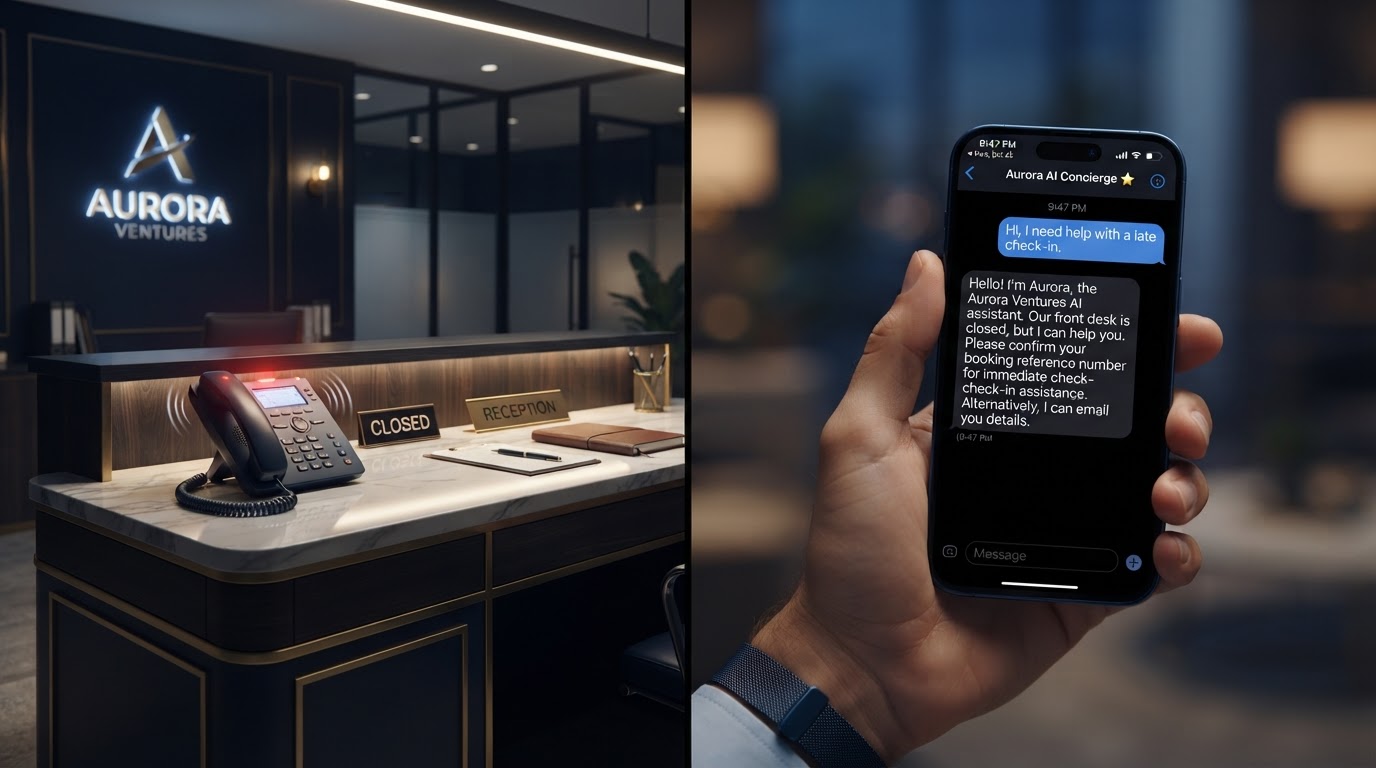
- Answers every call and text, nights and weekends included. A lead that comes in at 9:47 PM gets a text back within a minute.
- Answers common questions from your FAQs, your website, and your pricing rules.
- Books appointments straight into your calendar and sends reminders so people show up.
- Hands off to a live person when a caller needs one, with notes, so nobody repeats themselves.
- Logs everything in your CRM, so you can see every lead and every conversation.
The voice matters. We use natural-sounding voices that adapt to the caller's pace and tone, then we coach the AI using real calls, the same way you'd coach a new hire. Effort in, effort out.
AI receptionist vs. human receptionist: side by side
| Full-time receptionist | AI receptionist | |
|---|---|---|
| Annual cost | ~$54,000 (wages + benefits) | $3,300 to $18,000 |
| Hours covered | ~40 of 168 per week | 168 of 168 per week |
| Lead response time | Minutes to next business day | Under 1 minute |
| Calls at once | 1 | Many |
| Sick days, PTO, turnover | Yes | No |
| Ramp-up time | Weeks of training | Days of setup, then ongoing coaching |
| Builds relationships | Yes | No, that's your job |
| Handles complex or emotional calls | Yes | Hands off to a person |
The cost nobody puts on the spreadsheet: missed calls
The biggest expense usually isn't the salary; it's the leads that never get answered. Most owners compare paychecks and never price the calls going to voicemail.
Try this with your own numbers. Say you miss 5 calls a week after hours, 1 in 5 of those callers would have bought, and an average customer is worth $1,500:
- 15 missed calls × 20% = 1 lost customer a week
- 21 customer × $1,500 × 52 weeks = $78,000 a year walking out the door
That's more than the receptionist costs, and a receptionist working 9 to 5 still wouldn't catch those calls. In an emergency, the customer isn't comparing who's cheapest. They're comparing who answers.
Our free Revenue Calculator runs this math for your business in about a minute.
Where humans still win (and why the answer is usually both)
AI doesn't build relationships. You do. The lunch, the handshake, the thank-you gift for a referral, the calm voice on a hard call: that's human work, and I'd be lying if I told you otherwise.
The smartest setup for most small businesses is a hybrid:
- AI takes the repetitive work: first response, FAQs, booking, reminders, follow-up texts, after-hours coverage.
- Your people take the high-value work: closing, complex questions, upset customers, and the relationships that bring referrals.
One owner we worked with had her phone buzz 11 to 15 times during a 45-minute meeting. After we set up her AI receptionist, CRM, and booking, she got 15 to 20 hours a week back. She didn't need another hire. She needed a system.
Augmenting talent with technology, period.
How to decide: a 5-question checklist
If you answer yes to two or more of these, start with an AI receptionist before you post a job ad.
- Do calls or texts go unanswered after hours or on weekends?
- Does it take more than 5 minutes to respond to a new lead?
- Is your phone interrupting you during meetings, jobs, or family time?
- Do the same 10 questions make up most of your calls?
- Would a $54,000-a-year hire strain your cash flow right now?
If most of your calls are complex, emotional, or high-touch, hire the person, and let AI handle the follow-up and booking around them.
Frequently asked questions
How much does an AI receptionist cost for a small business?+
Most small businesses pay between $275 and $1,500 a month, depending on call volume, integrations, and how much automation is included. That's roughly $3,300 to $18,000 a year.
Is an AI receptionist cheaper than hiring a receptionist?+
Yes, in most cases. A full-time receptionist costs about $54,000 a year with benefits and taxes, so an AI receptionist typically costs 6% to 33% of a hire while covering all 168 hours of the week.
Will customers know they're talking to AI?+
Modern AI voices sound natural, and we recommend being upfront that callers are speaking with an AI assistant. Most callers care far more about getting a fast answer than about who gives it.
Can an AI receptionist book appointments?+
Yes. It books directly into your calendar, sends confirmations and reminders, and logs the lead in your CRM.
What happens when the AI can't answer a question?+
It hands the call or text to a live person on your team, with notes on what the caller needs.
Does an AI receptionist replace my staff?+
It replaces repetitive tasks, not relationships. Most owners use it to free their team for sales, service, and the calls that need a human.
What types of businesses use AI receptionists?+
Any business that misses calls or juggles leads: service companies, clinics, med spas, brokers, agencies, contractors, and professional offices.
Sources
Chris Karageuzian is the founder of Chris Alchemy Consulting in Pasadena, California. He spent 24 years in banking, lending, real estate, fintech, and AI, and built and sold the AI lending platform Help With My Loan. Today he helps small businesses install AI and automation systems that answer every lead, follow up consistently, and give owners their time back.